Just Dry Cleans: doorstep dry cleaning, collected and returned
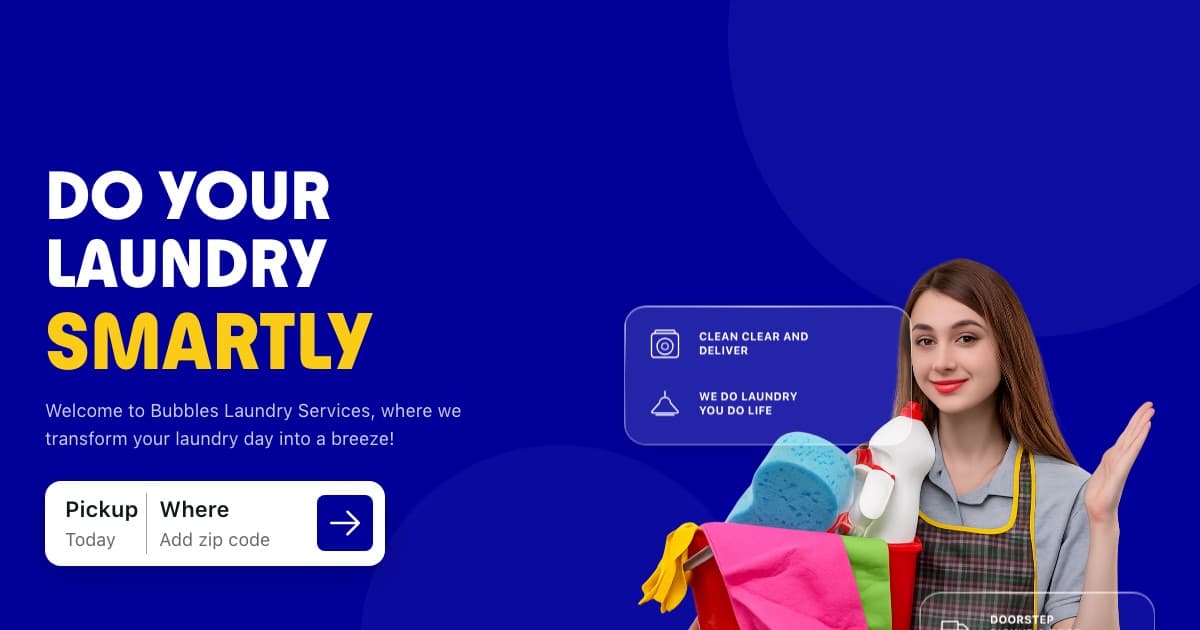
Just Dry Cleans is a UK on-demand laundry and dry cleaning service on the collect-clean-return model that ihateironing and Laundryheap made familiar. The customer never visits a shop. A laundry agent — a partner dry cleaner with its own premises and pressing equipment — collects garments from the doorstep, processes them, and brings them back. The Just Dry Cleans service runs as a four-step loop — you book, we collect, we clean, we deliver — across nine service lines, from wash and press-only through duvets, curtains, leather, and tallis cleaning, each with a per-item starting price: wash and iron from £1.95 per item, alterations from £5, as of September 2026.
Sigi also built a set of standalone marketing pages for London-area dry cleaners — Maurice Colp in Golders Green, Blue Bell in Amersham, and Hampstead Garment Care on Finchley Road — covered in our UK dry-cleaner landing pages case study. Those pages take bookings by phone or WhatsApp rather than through an app, and they set the operational bar the platform had to match: a standard 24-hour turnaround, same-day express for bags collected before 11am and returned by 4pm at a 50% surcharge, and simple menu pricing — wash and fold from £3.50 per kilo, dry cleaning from £6 per item, tailoring and repairs from £5, per the Maurice Colp service menu as of September 2026. Just Dry Cleans needed software that could take those promises from a phone call and a WhatsApp thread into a tracked order with a fair final price.
The problem: pricing blind, proving handovers, and growing by area
An on-demand laundry app looks like a delivery app from the outside, but it breaks three assumptions delivery apps rely on. The price is not known when the order is placed, the goods being moved belong to the customer, and every agent covers a fixed patch of the map. Booking by phone and WhatsApp works for a single counter and stops working the moment there are several agents and hundreds of bags in motion.
- Nobody can price a bag before seeing it. A shirt is £6 until it turns out to need a stain treatment and a button, so an order booked at a fixed price ends in either an argument or a loss for the shop.
- Garments leave the house with a stranger. Without a record of what was handed over at pickup and what came back at drop-off, every missing item or damaged coat becomes one person’s word against another’s.
- Customers change plans. A booking that cannot be canceled before the agent arrives generates support tickets and chargebacks rather than loyalty.
- Each shop serves a defined area. Adding a new agent in a new postcode had to be a configuration change in the admin panel, not a new release of the customer app.
Solution architecture: three surfaces sharing one order lifecycle
The on-demand laundry app platform is split into three surfaces that all read and write the same order record: a customer app with a matching website for booking, an agent app used by the laundry shops on the ground, and a web admin panel for the Just Dry Cleans team. Payments run through Stripe, with Apple Pay, Google Pay, and card payments on the customer side. Sigi delivered the full stack through its mobile app development and custom software practices, with the order lifecycle designed first and each screen built to move an order one step along it.
Every order moves through a single, explicit state machine, and the two handover captures are mandatory transitions rather than optional photos:
- Booked — the customer chooses services and a pickup slot, and Stripe takes the initial upfront amount.
- Picked up — the agent records the handover at the customer’s door, which locks the order to that agent and starts the clock.
- Processing — the shop cleans, presses, or repairs the items; the agent can add line items as they are discovered.
- Invoiced — the agent issues the final invoice for the work actually done, and the platform adjusts it against the upfront amount.
- Delivered — the agent records the second handover at drop-off, closing the order.
Two further decisions shaped the build. The pickup capture exists because the first handover, not the return, is where most disputes start; a drop-off-only record proves nothing about what left the house. And operational zones are data managed in the admin panel, so the business can switch on a new area — or assign a new agent to an existing one — without touching the customer app.
The stack we built it on
The platform is three surfaces over one shared order record: a customer app with a matching booking website, an agent app for the shops, and a web admin panel for the Just Dry Cleans team. Both native apps ship to iOS and Android and are live on the App Store and Google Play. Payments run through Stripe, with Apple Pay, Google Pay and saved cards on the customer side, and the agent’s final invoice settled against the customer’s upfront charge through the same Stripe layer.
How the platform is built and run
Just Dry Cleans is built the way an on-demand marketplace moving real goods at an after-the-fact price has to be — one shared order record, mandatory handover evidence, and payment that settles against the real job:
- Three surfaces over one order record: the customer app and booking website, the agent app, and the web admin panel all read and write the same order, so a status never updates on one surface and lags on another.
- One explicit order state machine — booked, picked up, processing, invoiced, delivered — where each transition is a defined step rather than a free-form status.
- Mandatory proof-of-delivery capture at both handovers: the pickup record is required before an order can move to processing, and the drop-off record closes it and completes the audit trail.
- Charge-upfront, invoice-after-inspection payments through Stripe, with Apple Pay, Google Pay and saved cards, and the agent’s final invoice settled against the customer’s upfront charge through the same Stripe layer.
- Operational zones managed as data in the admin panel, so switching on a new postcode or assigning a new agent is a configuration change rather than a customer-app release.
- Shop-side role-based access with team members, shop configuration and an earnings report scoped to each agent, plus booking alerts pushed to the shop as orders arrive.
- Release validated against the order lifecycle itself: every transition — the upfront Stripe charge, cancellation before pickup, both handover captures, the invoice adjustment — exercised end to end across the customer, agent and admin surfaces, with both native apps live on the App Store and Google Play.
What we implemented: customer app, agent app, and admin panel
Sigi designed, built and shipped all three surfaces of the platform. Here is what we implemented across the customer app and website, the agent app, and the admin panel.
Customer app and website: laundry pickup and delivery booking
- Service selection across dry cleaning, laundry, pressing, and repairs, with the same booking flow available in the mobile app and on the website.
- Pickup scheduling within the customer’s zone, so a booking is only accepted where an agent actually operates.
- Upfront payment at booking via Stripe, with Apple Pay, Google Pay, or a saved card, and the final adjusted invoice shown in the same order view once the agent issues it.
- Cancellation before pickup from the order screen, with no call to the shop required.
- Order status visible at each stage of the lifecycle — real-time order status tracking — including both handover records.
Agent app: pickups, processing, and proof of delivery
- A job list scoped to the agent’s zone, showing new bookings and the pickup slot for each, with booking alerts pushed to the shop as orders arrive.
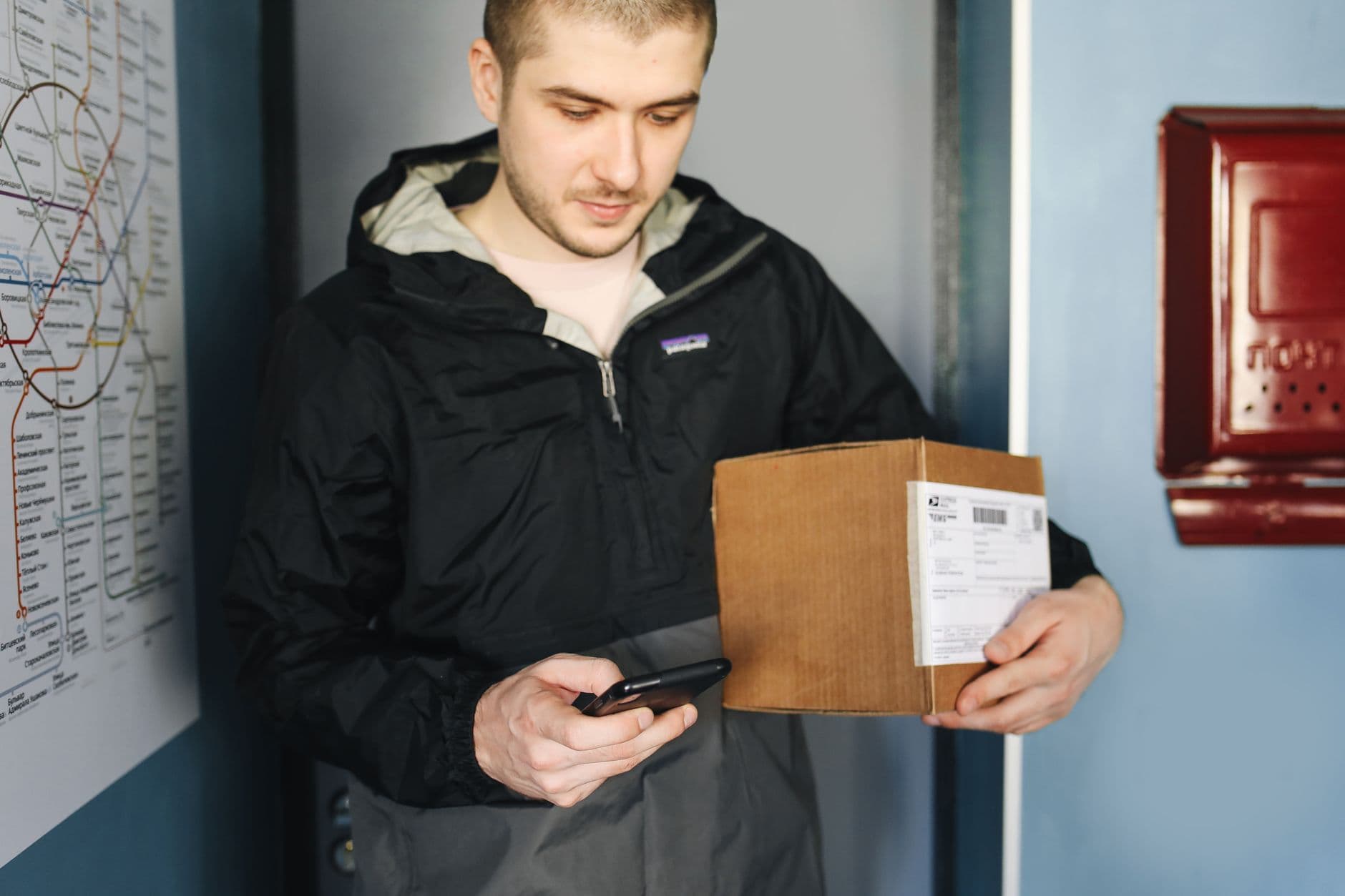
- Proof-of-delivery capture at pickup and again at drop-off: the pickup record is required before an order can move to processing, and the drop-off record closes it and completes the audit trail.
- Line-item invoicing after inspection, so extras such as stain treatment or a repair are added to the order rather than argued about later, followed by final invoice issue, which triggers the adjustment against the customer’s upfront payment.
- Shop-side configuration — services, schedules, and business details — plus team members with role-based access and an earnings report.
Admin panel: orders, agents, payments, and zones
- Live order board across every state, with the ability to see which agent holds which bag.
- Agent and laundry-shop management, including which zones each one serves.
- Payment oversight tied to Stripe — upfront amounts, final invoices, and the adjustments between them.
- Operational zone management, so coverage can be expanded postcode by postcode as new shops join.
Delivery practice: testing and releasing the order lifecycle
The order lifecycle above doubled as the acceptance checklist for release. Each transition — booking with an upfront Stripe charge, cancellation before pickup, the pickup capture, invoice adjustment, the drop-off capture — was exercised end to end across the customer, agent, and admin surfaces, because a status that updates in the agent app but not in the customer’s order view is exactly the gap that turns into a support call.
Both native apps shipped in spring 2026. The customer app, listed as Just Drycleans, first appeared on the App Store on 15 April 2026 and had reached version 1.2.6 by August; the shop-side app, Just Drycleans Agent, followed on 19 April 2026 and was at version 1.3.0 by the end of August. Both are also on Google Play under the same names.
The team and expertise behind the build
Just Dry Cleans was delivered end to end by one cross-functional Sigi team — product strategists, UI/UX designers, mobile and full-stack engineers, and QA — working as a single unit rather than handing the build between vendors. Sigi hires only specialists: every engineer is an expert in their own field, and we invest in the team as they deliver, supporting certifications and continuous learning so expert, motivated engineers stay on every build. It is the model we have run since 2015: deep, cross-industry expertise owning the whole stack, from the customer app and booking website to the agent app, the Stripe-settled invoicing, and the admin panel with expandable service zones. Turning a phone-and-WhatsApp counter into a tracked, fairly priced marketplace with proof of delivery at every handover is exactly the kind of multi-surface engineering our team is built for — the same capability behind our mobile app development and custom software work.
An on-demand laundry app like Laundryheap or ihateironing
Just Dry Cleans is an app-based, collect-clean-and-return laundry and dry-cleaning service — the same model customers know from Laundryheap and ihateironing: schedule a pickup, track the driver, get an itemized invoice, and have clothes returned within a day. Sigi built that platform end to end — the customer app, the agent app and the admin panel — so if you are launching in this space, this is the class of product we build. Two things are worth knowing about how it is put together:
- It is a bespoke on-demand marketplace on one shared order lifecycle, not a laundromat counter system. Off-the-shelf laundry software (CleanCloud, Cents, Starchup) runs a shop’s POS and can bolt on delivery, but it is general-market SaaS billed per store (roughly $30–$125 a month for CleanCloud, around $399 for Cents, from about $99 for Starchup) that you adapt to; Just Dry Cleans is owned outright and shaped to a pickup-and-return operation.
- Price-after-inspection, like the itemized-invoice model those services run: the customer is charged upfront, then the agent’s final invoice is settled against that charge through one Stripe layer, rather than a fixed counter price rung up at drop-off.
- Proof-of-delivery is mandatory at both handovers — the pickup capture is required before an order can move to processing, and the drop-off capture closes it — building an audit trail into the lifecycle.
- Operational zones are managed as data, so launching a new postcode or assigning a new agent is a configuration change in the admin panel, which is how a service like this grows area by area.
The honest trade-off: to simply run a shop counter with some delivery, an off-the-shelf laundry platform is faster to switch on and needs no engineering team. To compete with the likes of Laundryheap and ihateironing on service — your own app, your own pricing and handover rules, your own brand and data — a bespoke build is what that takes.
What shipped: a tracked, fairly priced on-demand laundry app
Just Dry Cleans now operates on an on-demand laundry app platform where every bag has a booked-to-delivered history with a record at each handover, every invoice reflects the inspected work, and every payment runs through Stripe rather than a card terminal at the counter. Adding a shop or a service area is an admin task rather than a development ticket.
See the service at justdrycleans.com, install the customer app from Google Play or the App Store, and browse the shop pages for Blue Bell Dry Cleaners and Hampstead Garment Care — the latter hosted on a subdomain of serviprapp.com, the domain of Sigi’s ServiPR marketplace product — to see the service menus and turnaround times the platform operates against.
Related on-demand builds and what to read next
A step-by-step walkthrough of this collect-clean-return model is in How to build an on-demand laundry app.
The same customer-app, provider-app, and admin-panel structure runs through ServiPR, an on-demand services marketplace, and the doorstep pickup and courier-app flow has a close relative in the Antrak courier platform, where a driver app takes jobs from a radius-based feed. Photo proof of delivery at the door also anchors the driver app in the Kwik eMart grocery delivery platform. For the phone-and-WhatsApp shop pages mentioned above, read the UK dry-cleaner landing pages case study.
Planning a laundry, cleaning, or other doorstep service with field agents and post-inspection pricing? Sigi’s on-demand industry practice covers customer, provider, and admin surfaces together — contact Sigi to walk through your order lifecycle.