
Your repo, tracker and chat
Tickets in Jira, Linear or Azure DevOps, conversations in Slack or Teams, pipelines in your CI — no parallel tooling.
Sigi Technologies
Backend engineers who ship APIs, integrations and real-time services in Node.js — the runtime behind our care, warehouse, ordering and delivery platforms in production.
Recognized & reviewed on
Versioned, documented endpoints with validation, auth and predictable errors, shipped inside your sprint.
Payments, accounting, government and third-party APIs wired with retries, idempotency and monitoring.
WebSockets, queues and scheduled jobs for tracking, dispatch and notifications that run without babysitting.
One of the roles under Hire Developers. Our Node.js developers work in your repository, your CI and your on-call norms — so API delivery speeds up without a recruiting cycle.
Node.js: fast to get an endpoint answering, slower to get a service that survives retries, race conditions and a partner API going down at 2 a.m. We are hired for the second half — contracts, idempotency, queues, observability and data integrity.
Engineering leaders usually add Node.js developers when integrations are the bottleneck, a monolith needs splitting, or real-time features are stalling the roadmap.
180+
Skilled software engineers delivering excellence
10+
Years of dedicated industry experience
200+
Successful software development projects
80+
Global clients
The Node.js engineers we place own services end to end — design, delivery, deployment and the pager — like an in-house backend hire would.
Express, NestJS or Fastify services with validation, versioning, auth and OpenAPI documentation your frontend can build against.
Payments (Stripe, Stripe Connect, Adyen, PayPal), accounting (QuickBooks, Xero), maps, messaging, and regulated APIs such as GP Connect, HMRC and DBS.
WebSockets, Redis-backed dispatch, queues and scheduled jobs for tracking, notifications and order state machines.
PostgreSQL, MySQL and MongoDB schemas, indexing, caching and multi-tenant isolation that stay fast as data grows.
Role-based access, OAuth, audit trails, encryption and the practices behind CQC, UK GDPR and DSPT-aligned platforms.
Docker, CI/CD, AWS deployment, logging, metrics and alerting so the service is operable, not just shipped.
Engineering leaders usually add Node.js developers when one of these is true.
Webhooks drop, retries duplicate records, and nobody owns the partner API contract.
Screens are designed and ready; endpoints, auth and data shapes are what the roadmap is blocked on.
Live tracking, dispatch, chat or notifications need WebSockets, queues and state that stays consistent.
Extracting services, adding queues and keeping data integrity while features keep shipping.
Slow queries, missing indexes and tenant isolation problems are surfacing under real traffic.
You need vetted Node.js hands inside weeks, embedded in your repo and on-call norms.
Node.js backends we have shipped
Our case studies include Node.js backends for a home-care platform integrated with GP Connect, HMRC and DBS, a multi-tenant warehouse management API, an ordering platform on Stripe Connect and QuickBooks, and a multi-country food and grocery platform on Node.js, MySQL and Redis with server-side dispatch. We cite that delivered work; we do not invent uptime or throughput figures.
Node.js backend integrating GP Connect, HMRC and DBS, built to CQC, UK GDPR and DSPT requirements.
Read the case study →Multi-tenant WMS API serving web dashboards and a Flutter operator app.
Read the case study →Ordering and partner-payout backend on Stripe Connect with QuickBooks accounting sync.
Read the case study →Brief us on the services, the integrations and the first sprint. We send a vetted shortlist within 3 days, you interview, and your Node.js developer starts on a two-week trial inside your repo.
Hire Developers places Node.js talent by the kind of system you run, because a regulated care platform and a real-time delivery backend need different backend instincts.
Care, health and finance-adjacent systems with audit trails, access control and government integrations — as on Allfor Care.
Tenant isolation, role models and data-heavy dashboards served from one API — as on 3DLogistiX.
Order state machines, Stripe Connect payouts, accounting sync and driver dispatch — as on Busy Bean and our food and grocery platform.
How we work
Embedded engineers only pay off when they operate inside your delivery system rather than beside it.
Tickets in Jira, Linear or Azure DevOps, conversations in Slack or Teams, pipelines in your CI — no parallel tooling.
Pull requests, code owners, runbooks and alerting follow the standards your team already holds.
Contracts agreed with the frontend first, tests on critical paths, and deploys that fit your release window.
A Node.js developer should make the API layer a dependable platform rather than a queue of surprises.
Agreed contracts and documented endpoints let UI and API work move in parallel.
Idempotent handlers, retries and alerts replace silent data drift.
Dispatch, tracking and notifications built on queues and state machines, not polling hacks.
Logs, metrics and runbooks arrive with the code, so the pager is calmer.
One Node.js developer owning a single service or integration is the usual first seat; teams add a second once the first release and its on-call week go quietly. Picking up a live Node.js codebase mid-project — to extend APIs, harden integrations or add real-time features — is one of our most common starts.
Brands and organizations that trust our delivery
Related client work in this discipline.

Projects > Healthcare
Sigi built a React and Node.js care-operations platform for Harrow home care provider Allfor Care, linking client and staff records, shifts, compliance documents and invoicing.
Allfor Care Services Ltd.

Projects > Education
A Laravel 10 learning management system for a Bulawayo language school, with Zoom API live classes, Paynow payments, quizzes and certificates replacing WhatsApp groups and offline records—administrative effort down 60%, per the client.
Alpha Academy (Alpha Language Centre)

Projects > Logistics
A React and Node.js freight platform that prices shipments by billable weight and HS code, emails a PDF waybill at order placement, takes card, Paystack and PayPal payments, and tracks orders to 34 destination countries.
Pacifrica Express
Projects > Fitness
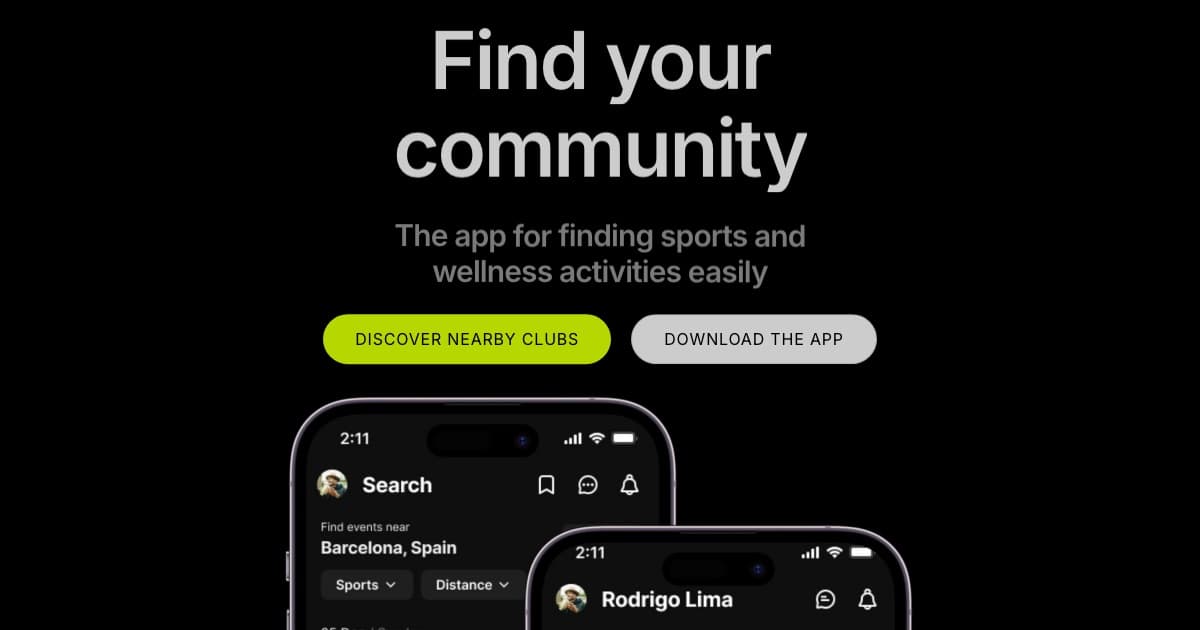
Sigi built LinMo’s Flutter apps and Node.js backend so members discover nearby sports groups and book classes while coaches and clubs schedule events, manage capacity, and collect payments.
LinMo (Liveliness Sports S.L)

Projects > Logistics
Flutter customer and driver apps on a Node.js, MongoDB and AWS backend, with Stripe payments, Google Maps tracking and server-side driver assignment.
Bix Delivery (Post Marketplace Inc)

Projects > Retail
A custom Laravel ERP for a Pakistani electronics retailer that unified multi-branch stock, sales, installment collections, and bookkeeping for 10,000+ customers, cutting manual bookkeeping by a client-reported 70%.
Bilawal Group of Electronics
How we staff Node.js roles
Match the model to the backend: a standing seat for continuous API delivery, a specialist for an integration or migration push, or a pod when the work spans API, UI and QA.
A standing seat owning services, integrations and their operation.
Time-boxed help for a payments, accounting or government integration, or a monolith split.
A backend engineer paired with a frontend or mobile engineer and QA for features that cross the API boundary.
Express, NestJS and Fastify on the framework side; PostgreSQL, MySQL, MongoDB and Redis on the data side; TypeScript by default. We work in the stack your codebase already has rather than migrating it to ours.
Yes. Picking up a live Node.js codebase mid-project — to extend APIs, harden integrations or add real-time features — is one of our most common starts.
Yes. Our shipped platforms integrate Stripe and Stripe Connect payouts, Adyen, PayPal and QuickBooks, and route checkout by market. Card data stays with the payment gateway; it never touches the client’s servers.
Yes. The Allfor Care platform integrates GP Connect, HMRC and DBS and was built to CQC, UK GDPR and DSPT requirements — access control, audit trails and data handling are familiar work.
Yes. WebSockets, Redis-backed dispatch, queues and scheduled jobs power live tracking, order state changes and notifications on our delivery and ordering platforms.
Yes. Docker, CI/CD, AWS deployment, logging, metrics and alerting are part of the role — a service is not done until it is operable.
Yes. One Node.js developer owning a single service or integration is the usual first seat; teams add a second once the first release and its on-call week go quietly.
Every candidate is screened by a senior backend engineer on real code, API design and failure handling — not CVs alone. We send a vetted shortlist within 3 days, you interview the people you want, and you can start on a two-week trial inside your repo before committing.