
ServiPR: a services marketplace app built for Puerto Rico
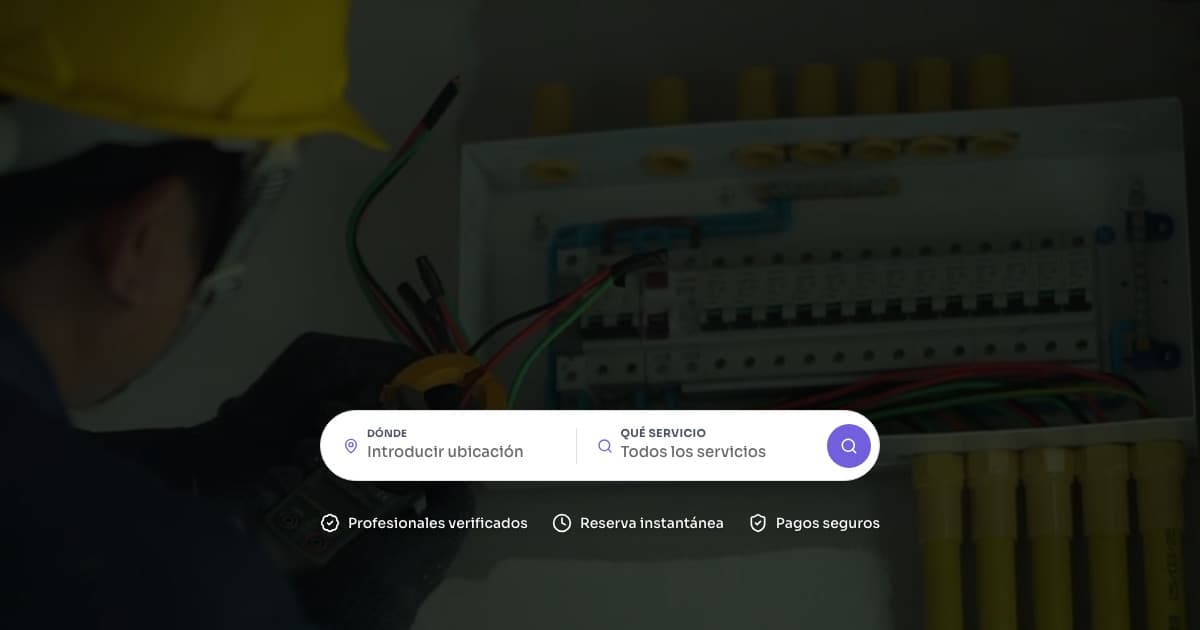
ServiPR Ltd. runs a local services marketplace for Puerto Rico in the mold of Thumbtack, TaskRabbit, and Urban Company. The public site lists providers across ten municipalities—San Juan, Bayamón, Carolina, Ponce, Caguas, Guaynabo, Mayagüez, Trujillo Alto, Arecibo, and Fajardo—and the categories range from dog training and Mac repair to carpentry, interior design, locksmiths, salons, and cleaning. It promises customers three things: only verified professionals are shown, bookings are instant, and if a job is not done as agreed, ServiPR steps in to resolve it.
To deliver on those promises the company needed more than a directory. It needed a customer app, a provider app that small businesses would actually run their day from, and a back office to supervise the whole marketplace. Sigi Technologies took on that full build as an on-demand product engagement, covering mobile development, UI/UX, payments, and the operational tooling behind the apps.
The problem: trust, pricing, and two very different users
Service marketplaces fail quietly. A customer who cannot tell a reliable plumber from an unreliable one, or who discovers the price only after the visit, simply does not come back. Providers in Puerto Rico’s beauty, repair, and home-services trades are often one- to five-person businesses juggling walk-ins, WhatsApp messages, and cash, so any app that adds admin without adding bookings gets deleted. ServiPR’s brief broke down into three concrete gaps:
- Discovery without trust signals: customers needed vetted profiles, ratings and reviews, and prices visible before booking, not after.
- Providers needed a real business console: calendar and staff management, walk-ins, services with durations and prices, and payouts—bilingual, because many providers work in Spanish while the customer-facing brand is bilingual.
- Money had to move safely in both directions: card and Apple Pay for customers, Stripe payouts, cash tracking, deposits, and tips for providers, with the marketplace able to see and reconcile all of it.
Marketplace architecture: three surfaces, one backend
The platform is split into three surfaces that share one backend: a customer app on iOS and Android, a provider app on iOS and Android, and a web admin panel. Both mobile apps are published under the com.sigitechnologies package namespace, and the website at serviprapp.com handles marketing, city landing pages, login via Google, Apple, or email, and deep links into the stores. Our mobile app development team built the two apps in parallel so neither side lagged the other at launch.
Three design decisions shaped the build. First, bookings are made against services with fixed durations and prices that providers configure themselves, which is what makes up-front pricing and calendar slots possible. Second, a booking can be assigned to a specific team member, not just a business, so a salon with four chairs and a solo handyman use the same model. Third, all money runs through Stripe—card and digital-wallet payments in, provider payouts out—so the admin panel can see every transaction rather than relying on providers to self-report cash.
The stack we built it on
The public marketing site at serviprapp.com is a Next.js application; the customer and provider apps ship to iOS and Android from one mobile codebase, and both iOS builds also run on Apple silicon Macs and visionOS through iPhone compatibility. Payments run through Stripe, with Apple Pay for checkout and Sign in with Apple and Google Sign-In alongside email for login. Every booking, payout and transaction flows through that Stripe layer so the admin panel can reconcile the whole marketplace rather than trusting self-reported cash.
How the platform is built and run
The marketplace is built as three surfaces over one backend, with money running through Stripe end to end so the whole marketplace stays reconcilable:
- Three surfaces share one backend — a customer app and a provider app, both on iOS and Android, and a web admin panel — with the two apps shipped from one mobile codebase and the marketing site built in Next.js.
- Bookings are made against services with provider-set fixed durations and prices, and a booking can be assigned to a specific team member, so a solo handyman and a salon with several chairs use the same model.
- Every payment and payout runs through Stripe — card and Apple Pay in, provider payouts out — so the admin panel can reconcile the whole marketplace rather than trusting self-reported cash.
- Each provider links its own Stripe account from inside the provider app, so ServiPR does not hold provider funds, identity and payout checks sit with Stripe, and deposits, refunds and tips are itemized per booking.
- Bilingual English/Spanish throughout both apps, with in-app chat carrying text, voice notes, images and location, plus push notifications for new messages and customer feedback.
- Login via Sign in with Apple, Google Sign-In and email across the apps and website, reporting exportable as CSV, and both iOS builds also running on Apple silicon Macs and visionOS through iPhone compatibility.
- Sigi handled store submission and the post-launch release history for both apps on both platforms, publishing under the client’s own developer accounts.
What we implemented: the on-demand services marketplace
Sigi designed, built and shipped all three surfaces of the marketplace. Here is what we implemented across the customer app, the provider app and the admin panel.
Customer app: find, book, and pay a local provider
The customer app is organized around a short flow — discover, book, pay, chat, manage — and everything else is there to remove a reason to abandon it.
- Discovery: providers plotted on a map, filters by category, task-based search, and provider profiles with ratings and reviews.
- Booking: pick a service, pick a team member where the business has staff, choose a date and time from live availability, and attach a saved address.
- Payment: card or Apple Pay through Stripe, with the price shown before confirmation; deposits where the provider requires them.
- Chat: message the provider before and after the appointment without leaving the app.
- Management: view, reschedule, or cancel bookings from the profile; favorites and saved addresses so a repeat booking takes one tap; add appointments to the phone calendar.
- Sign-in with Apple, Google, or email, matching the web login.
Provider app: a bilingual business console for small service businesses
The provider app went live on the App Store nine days after the customer app and is where most of the product’s complexity lives. It is built for the barbershop, spa, clinic, or studio owner as much as the individual tradesperson, and runs in English and Spanish.
- Appointments: calendar and list views filtered by service, team member, or status; walk-in bookings; reschedule, cancel, or extend an appointment; online/offline status so a provider can pause new requests.
- Team: add staff, assign them to services and bookings, and track performance and payouts on salary, commission, or rent-a-chair arrangements.
- Services and pricing: create services with durations and prices, group them by category, run promotions, and set business hours and availability.
- Payments: Stripe-connected card and digital-wallet payments, cash recording, tips, and a per-booking earnings and payout history.
- Communication: in-app chat supporting text, voice notes, images, and location, with push notifications for new messages and customer feedback.
- Business management: profile with address and hours, portfolio images, and downloadable financial, booking, and staff reports with CSV export of booking history and sales.
- Reports and insights: financial reports, booking and conversion reports, staff performance, and busiest days and peak times.
Admin panel and website: running the marketplace
The admin panel is the ServiPR team’s view of the whole marketplace: provider onboarding and verification, categories and cities, bookings and disputes, and the transaction trail needed to honor the “work done right—guaranteed” promise on the site. It is an internal tool with no public URL, so it is the one surface a reader cannot open. The public website carries the Spanish-first marketing pages, per-city landing pages, guides on costs and maintenance, a provider recruitment section, and login. That combination of mobile apps and a web back office is typical of the custom software Sigi builds for marketplace clients.
Delivery: shipping two apps to four store listings
The customer app’s 1.0 reached the App Store on 24 March 2026 and the provider app followed on 2 April. Both have iterated steadily since: Spanish support for the in-app experience and the store listings landed in early August (provider 1.0.9 on 1 August, customer 1.4.5 on 10 August), and by mid-August the customer app was on version 1.4.7 and the provider app on 1.0.12, with the Google Play listings updated on 13 and 19 August respectively. Both iOS builds also run on Apple silicon Macs and visionOS through iPhone compatibility.
Sigi handled store submissions for both apps on both platforms, publishing under the client’s own developer accounts rather than Sigi’s—the App Store seller of record is an individual on the ServiPR side, and the Google Play developer name is ServiPR. The demo videos used for review and marketing—a customer app walkthrough and a provider app short on the Sigi Technologies channel—and the post-launch bug-fix and performance releases that make up the version history were also Sigi’s work.
The team and expertise behind the build
ServiPR was delivered end to end by one cross-functional Sigi team — product strategists, UI/UX designers, mobile and full-stack engineers, and QA — working as a single unit rather than handing the build between vendors. Sigi hires only specialists: every engineer is an expert in their own field, and we invest in the team as they deliver, supporting certifications and continuous learning so expert, motivated engineers stay on every build. It is the model we have run since 2015: deep, cross-industry expertise owning the whole stack, from the two native apps and the Next.js marketing site to the Stripe payments layer and the admin back office, all shipped and maintained across four store listings. Building both sides of a marketplace in parallel, in two languages, with money moving safely in both directions is exactly the kind of multi-surface engineering our team is built for — the same capability behind our mobile app development and custom software work.
Custom-built versus listing on TaskRabbit, Thumbtack or Angi
A provider in Puerto Rico could list on TaskRabbit, Thumbtack or Angi instead of building a marketplace. ServiPR was built as the operator’s own product because those platforms are national, English-first, and keep the customer relationship and a cut of the money:
- They own the customer and charge for access: TaskRabbit takes roughly a 15% commission, Thumbtack sells leads, and Angi charges per lead plus an annual membership — none of which leaves a local operator with their own branded marketplace.
- They are US-national and English-first; ServiPR is built for Puerto Rico and is bilingual English/Spanish throughout both apps, matching how the market actually searches and books.
- ServiPR is the operator’s own platform: each provider links their own Stripe account so the operator never holds provider funds, and the operator sets the categories, rules and fees rather than accepting a national platform’s.
- A white-label clone could stand a marketplace up faster, but ServiPR’s model — provider-set fixed durations and prices, team-member assignment, bilingual chat with voice notes, and Stripe Connect payouts — is built to this operation rather than configured around a template.
The honest trade-off: listing on an established marketplace brings instant demand and needs no build, which is the right start for many providers. Owning the marketplace — the brand, the customer, the rules and the payouts — is what a custom build gives an operator ready to run their own platform.
What shipped: a live marketplace on iOS and Android across Puerto Rico
ServiPR now operates a complete on-demand services marketplace rather than a listings site: four store listings (customer and provider apps on iOS and Android), a website with provider landing pages for ten municipalities, and a back office that sees every booking and payment. Customers can find a vetted provider, see the price, book a specific team member, pay, and chat, while providers get a calendar, staff and payout management, and reporting in the language they work in. The apps are still early in their store life, so the measure at this stage is a working, maintained product with a live payment flow on both platforms.
Try it: the ServiPR customer app on the App Store or Google Play, the ServiPR Provider app on the App Store or Google Play, and the website at serviprapp.com.
Related on-demand marketplace work
The two-sided booking and Stripe-connected payout pattern is also walked through in How to build a multi-vendor marketplace.
ServiPR shares its bones with several other Sigi projects. Mahir Company — an on-demand home services and personal-care marketplace Sigi built for Pakistan — runs the same customer-app, provider-app, and admin-panel architecture, pairing a Flutter customer app with a Mahir Partners technician app and a Next.js admin panel with live tracking. Trim applies the same booking and staff model to grooming, and Woowlook focuses on salon scheduling. The customer-app, worker-app, and admin-panel pattern with Stripe in the middle also runs Just Dry Cleans, an on-demand laundry service in the UK, while My Dormot puts construction materials and trades behind one order model, the agritech marketplace does the same for farm machinery rental, and LinMo turns two-sided booking toward group sports. On the web side, the dry-cleaner landing pages Sigi built for three UK shops are the single-location cousin of ServiPR’s per-city pages. If you are planning a two-sided services app, see our on-demand industry practice and UI/UX design services, or contact Sigi to talk through the marketplace you want to build.